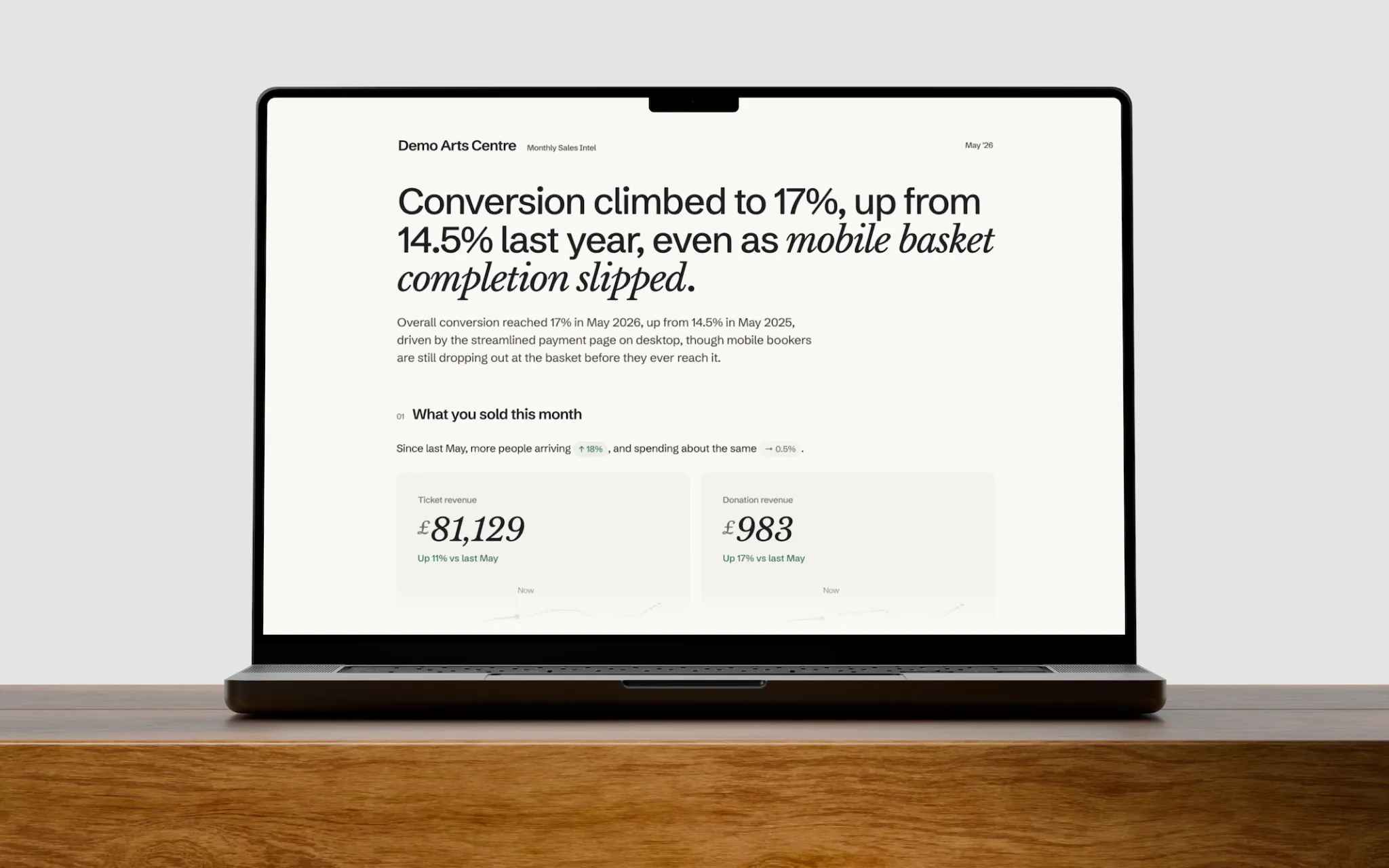
A few clients came to me with loads of data, a lot of noise and little actionable signal. Payments, Google Analytics, CRM and email all recording everything, and no idea which numbers actually mattered.
They're not unusual. There's more data sitting in more tools than ever, and most of it goes unread.
Seagate and IDC surveyed 1,500 enterprise leaders and found 68% of available data is never put to work. Oracle's research found 77% of leaders say the charts they get don't always relate to the decisions they face.
Someone builds the report, opens it once, leaves it, and goes back to gut feel.
Unless you have an in-house analyst, the cognitive load of reading, understanding and acting on the data is too high.
While these specific clients are in the ticket space, I've applied the same principles to all kinds of clients from research companies to asset managers.
Why yet another dashboard won't fix the issue
The most useful insight holds three things. What happened (the numbers), why (the analysis and behaviour), and the action (what to do about it).
Generic dashboards in each tool use generic charts, and disconnected numbers that often don't tell the full story.
They say; here's some data, good luck.
Start with known blindspots, not metrics
When I started this with clients, one thing came up fast: they couldn't tell me what they wanted to know, but they could tell me their current blind spots. And once they saw the data visualised, it helped stimulate questions they needed to answer.
That's what makes this an ongoing effort rather than a one-off: each month it answers the real questions, and each month those questions sharpen.
Blindspots helped uncover the starter questions:
What did we sell this month?
Who's booking?
Is the booking flow holding up?
Which shows worked and which didn't?
What should we do about any of it?
Each section answers one question with the smallest set of numbers visualised, then labels the answer steady or worth acting on. Under the hood there is more data that is used to help answer the questions (things like per device performance) but every data point shown increases noise and reduces signal.
NB no real client data is being used below.
The top-line
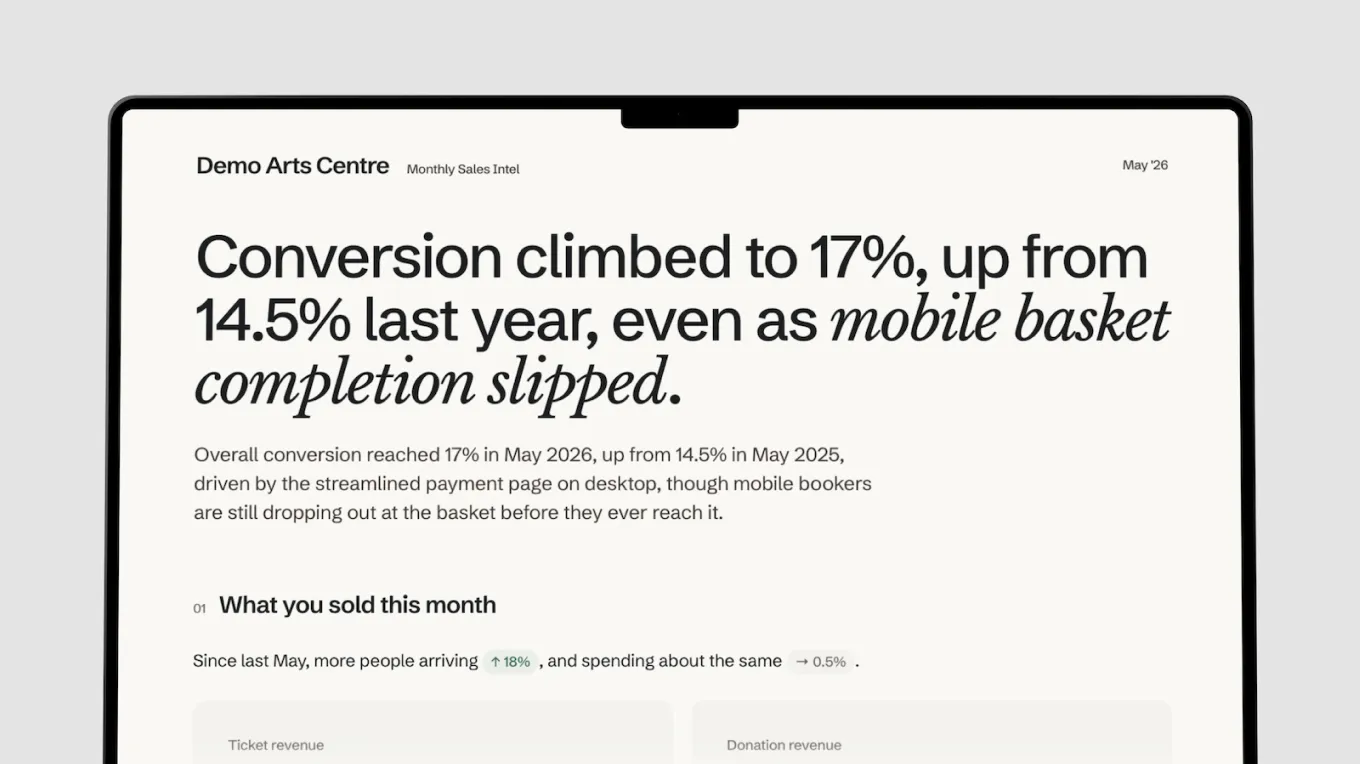
A snapshot surfacing the biggest thing that month, mostly to build the narrative, set the scene and draw in the reader.
How's business
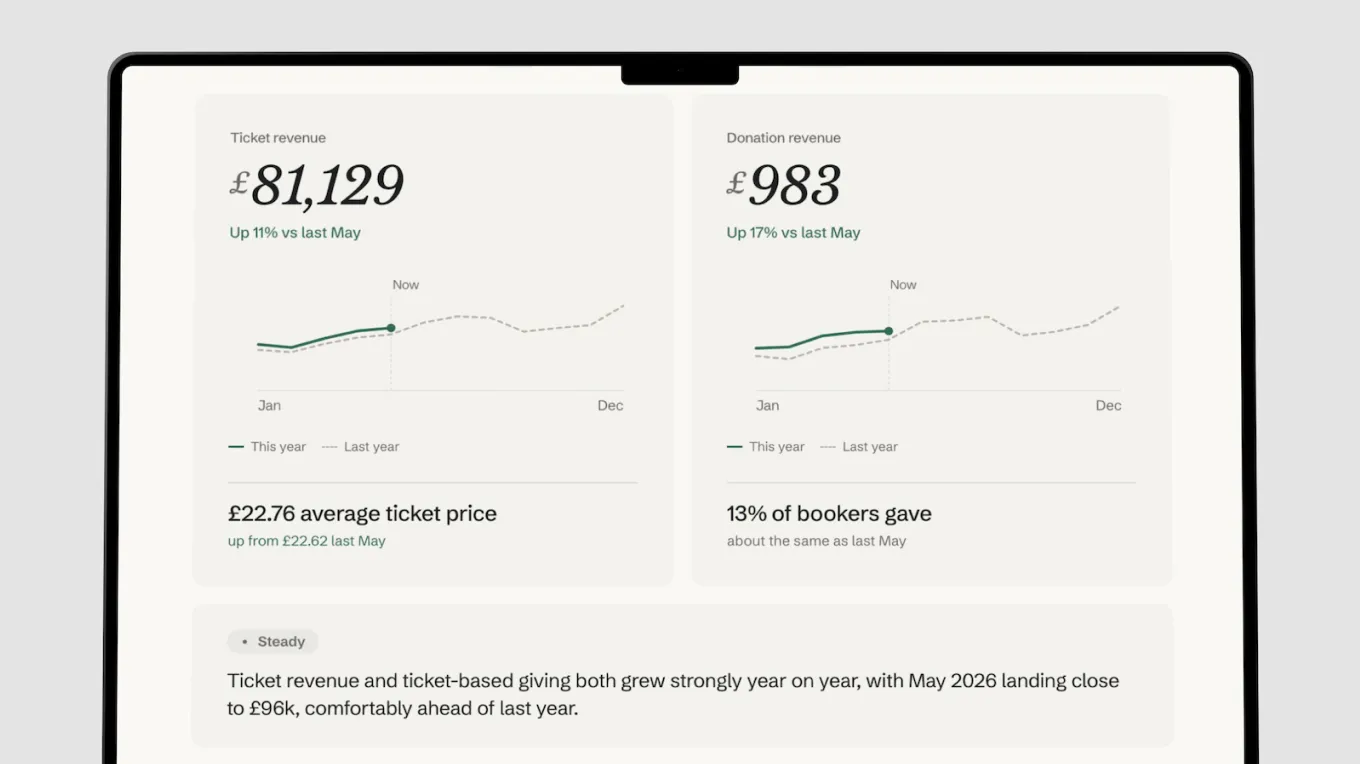
In the case of clients selling tickets, revenue and donations are the headline figures. So we lead with them, along with a trend. These venues are seasonal so upticks during the Christmas period are common. The benchmarks are mostly YoY for this reason.
Revenue grew year on year and held to its usual pattern, so no decision falls out of it. The report says that plainly and moves on, rather than asking you to work it out from a chart.
Who's booking?
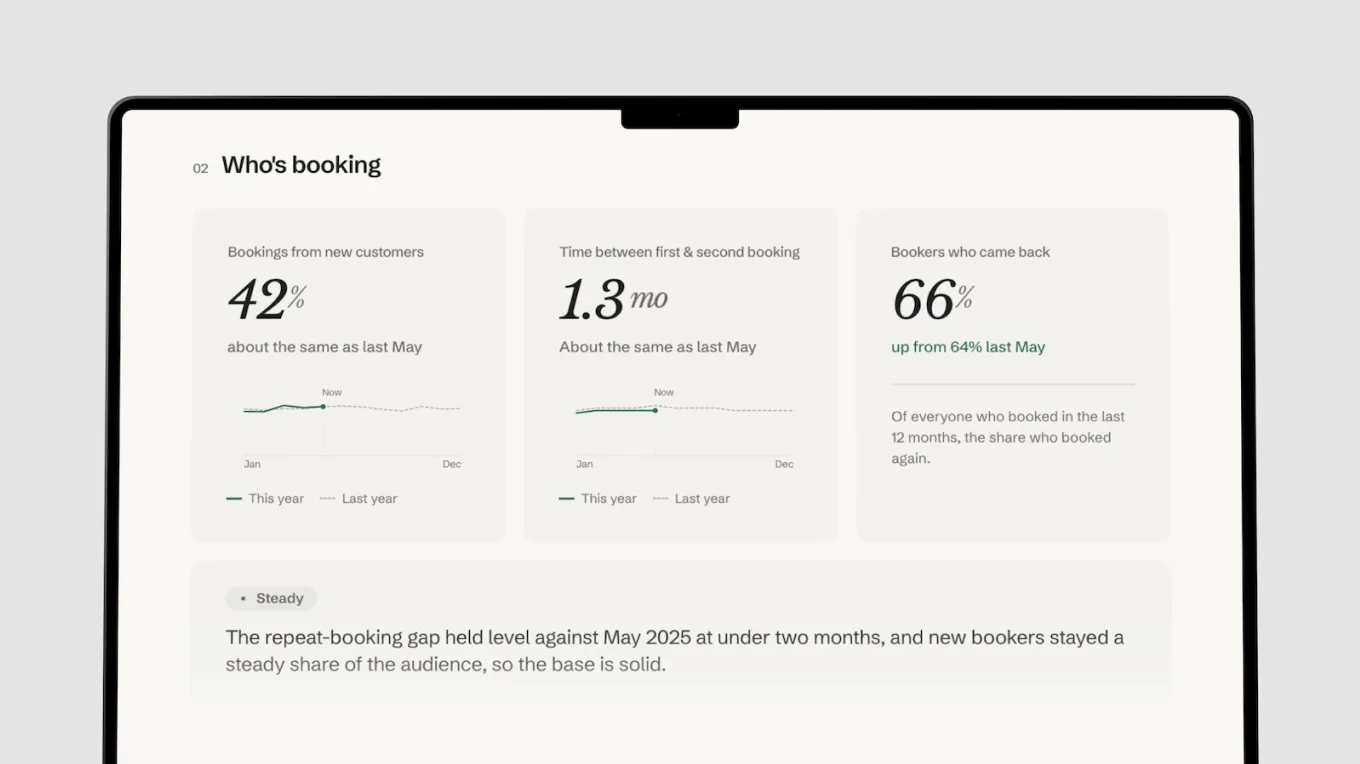
Are we capturing more customers? Are they coming back, and how quickly? All within the context of previous period performances.
Here we can see new bookers and repeat timing both held against last May, so the base is solid and there's nothing to act on.
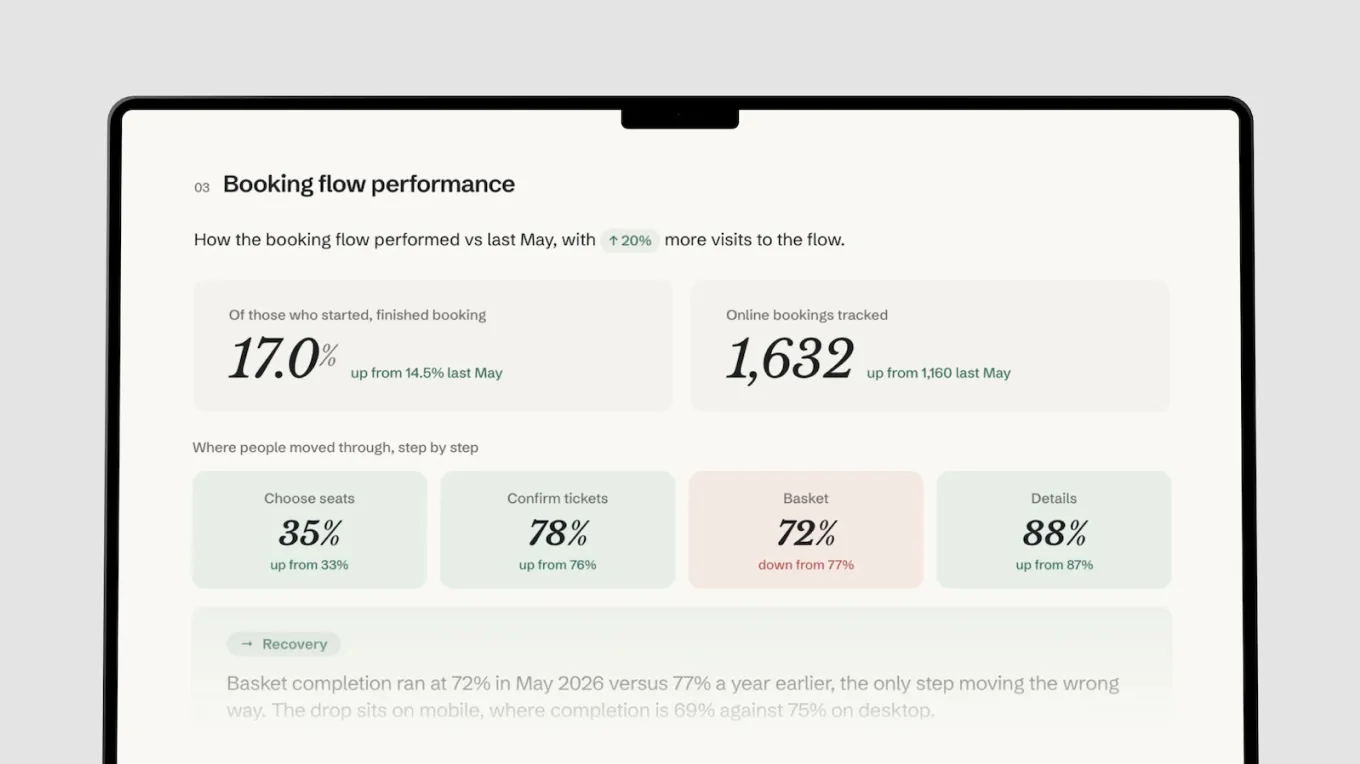
Booking flow performance
The flow section is where the first thing worth acting on shows up. Overall conversion climbed to 17% from 14.5% a year earlier, which reads as good news but isn't the signal. The signal is one step inside it: basket completion ran at 72% against 77% last year, the only step moving the wrong way, concentrated on mobile.
Show by show insights
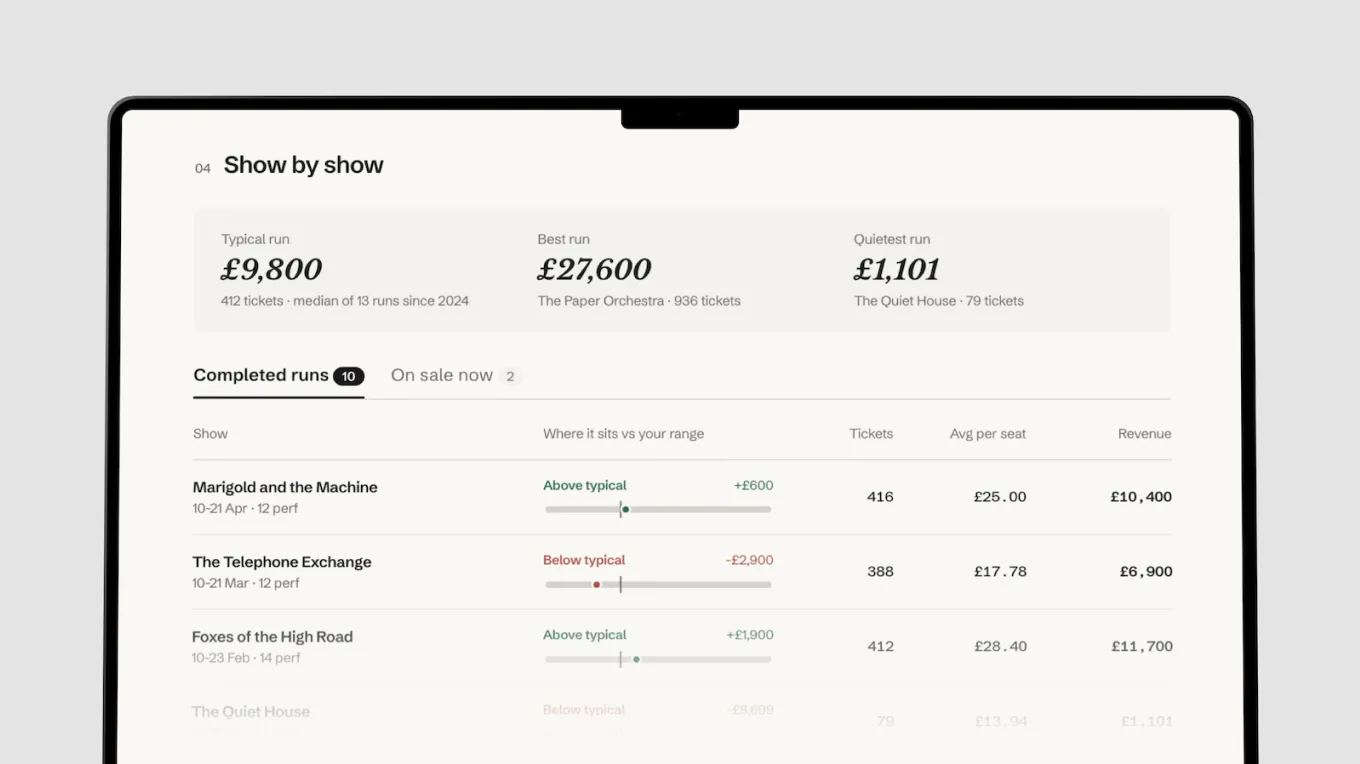
To answer 'what shows are returning most revenue'. We rank each run against the venue's typical range. This section provides a huge tactical advantage when planning programming for future seasons.
One new question surfaced here that we'll fold in next: which types of show are pulling in new audiences? This is how to sharpen insight over time.
Turning insight into action
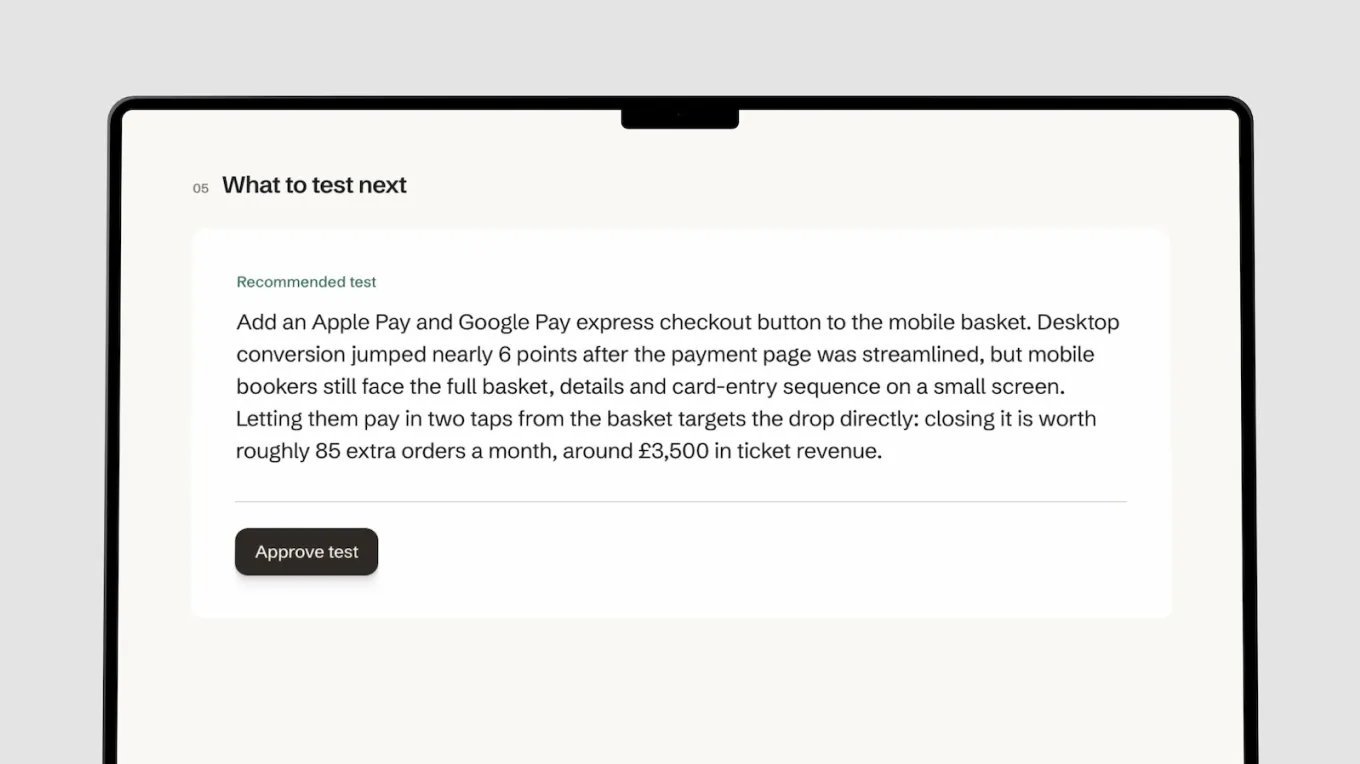
Every month ends here. I take the biggest opportunity surfaced and turn it into a hypothesis to test, with a simple pathway to approve the test.
The next step would be looking at behaviour recordings to see if the on site user behaviour aligned with this hypothesis. If it does, we'd ship the express button, record the change in the report's memory and track movement over future months.
Handing over signal, instead of just data
The solution I came to is surfacing less, not more. Asking what questions they need answered, what blindspots they're feeling, then combining their data sources into one monthly narrative that ends in an action. The hard part sits well away from the charting. It's hiding the noise, finding the blindspots, and sharpening the questions month on month as the team tells me what they actually need.
I'd rather send something that ends in a decision than another dashboard to ignore.
If you suspect you've got blind spots and no clear read on what to act on, or you're a venue on Spektrix who wants this kind of reporting, I'm happy to talk it through.